

WHAT IF YOU DIDN’T HAVE TO CREATE THE PRODUCT FROM SCRATCH?
Dropshipping is one way to build an online business.
Licensed digital products are another.
If you’ve landed on this page, you’re probably still working out what kind of online business you actually want to build.
And that’s a good position to be in.
Because before you spend weeks building around one particular model, it makes sense to understand what your other options actually look like.
You already know the basic idea behind dropshipping:
You find a physical product.
You work with a supplier.
You build somewhere to sell it.
You attract customers.
And when someone places an order, that product ultimately needs to make its way from the supplier to the customer.
There’s nothing wrong with that model.
But physical products aren’t the only things that can be sold online.
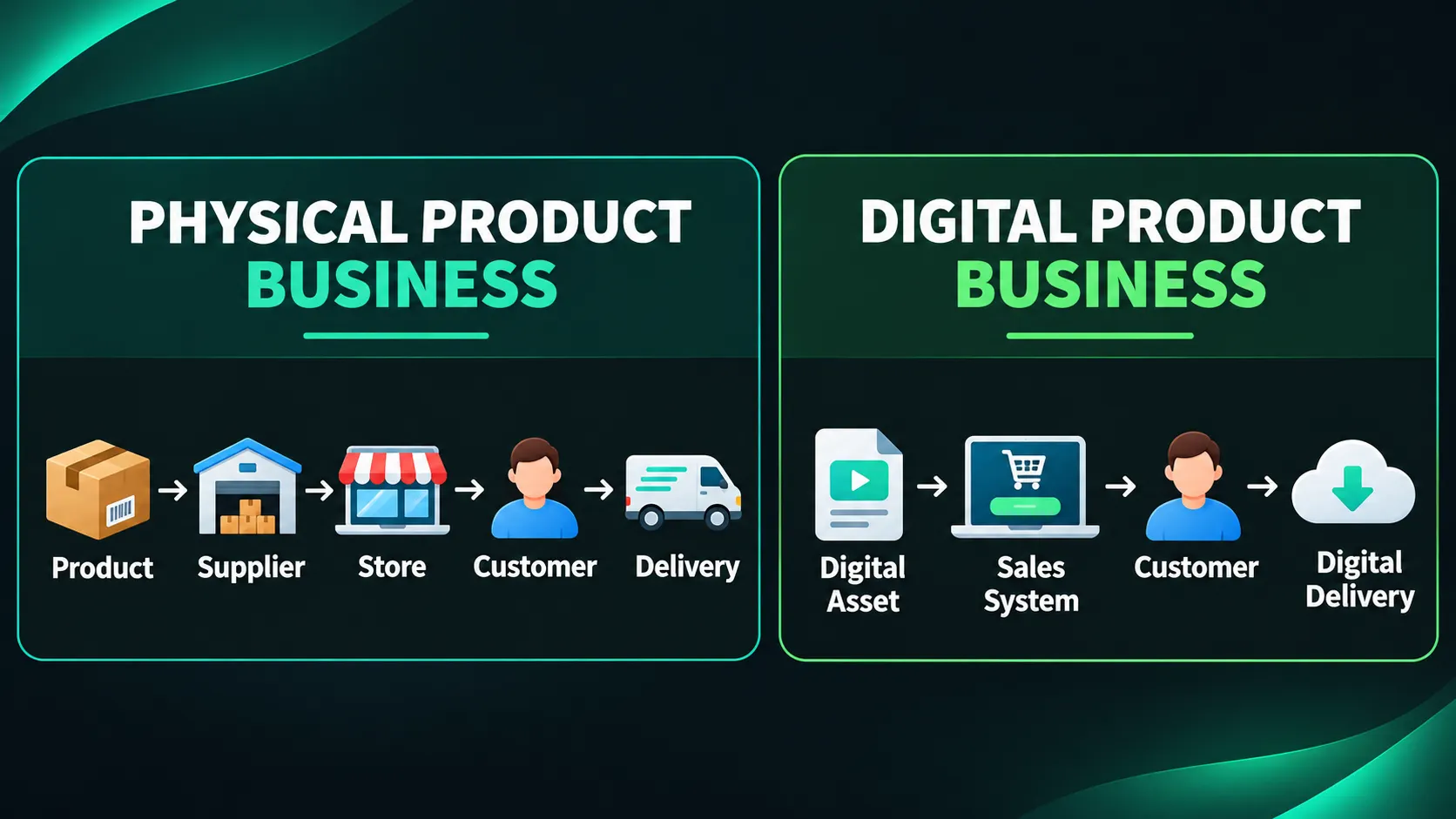
THE PRODUCT CAN BE DIGITAL INSTEAD
A digital product could be training, education, information, a resource, a system or another type of content that can be delivered electronically.
So instead of a physical parcel being packed and shipped...
the customer can receive access digitally.
That changes some of the moving parts.
There’s no physical stock to hold.
No warehouse needed for the product.
No packaging.
And no physical parcel that needs shipping to the customer.
But there’s still one obvious problem.
SOMEBODY STILL HAS TO CREATE THE DIGITAL PRODUCT
Normally, if you decide to build a digital-product business, you first have to create something worth selling.
That might mean:
Researching the subject
Planning the product
Writing the material
Recording videos
Producing the content
Organising it properly
Creating the delivery system
And for somebody who is just getting started, that can become another major project before they’ve even begun marketing.
But there is another way this can work.
THIS IS WHERE LICENSING CHANGES THE STARTING POINT
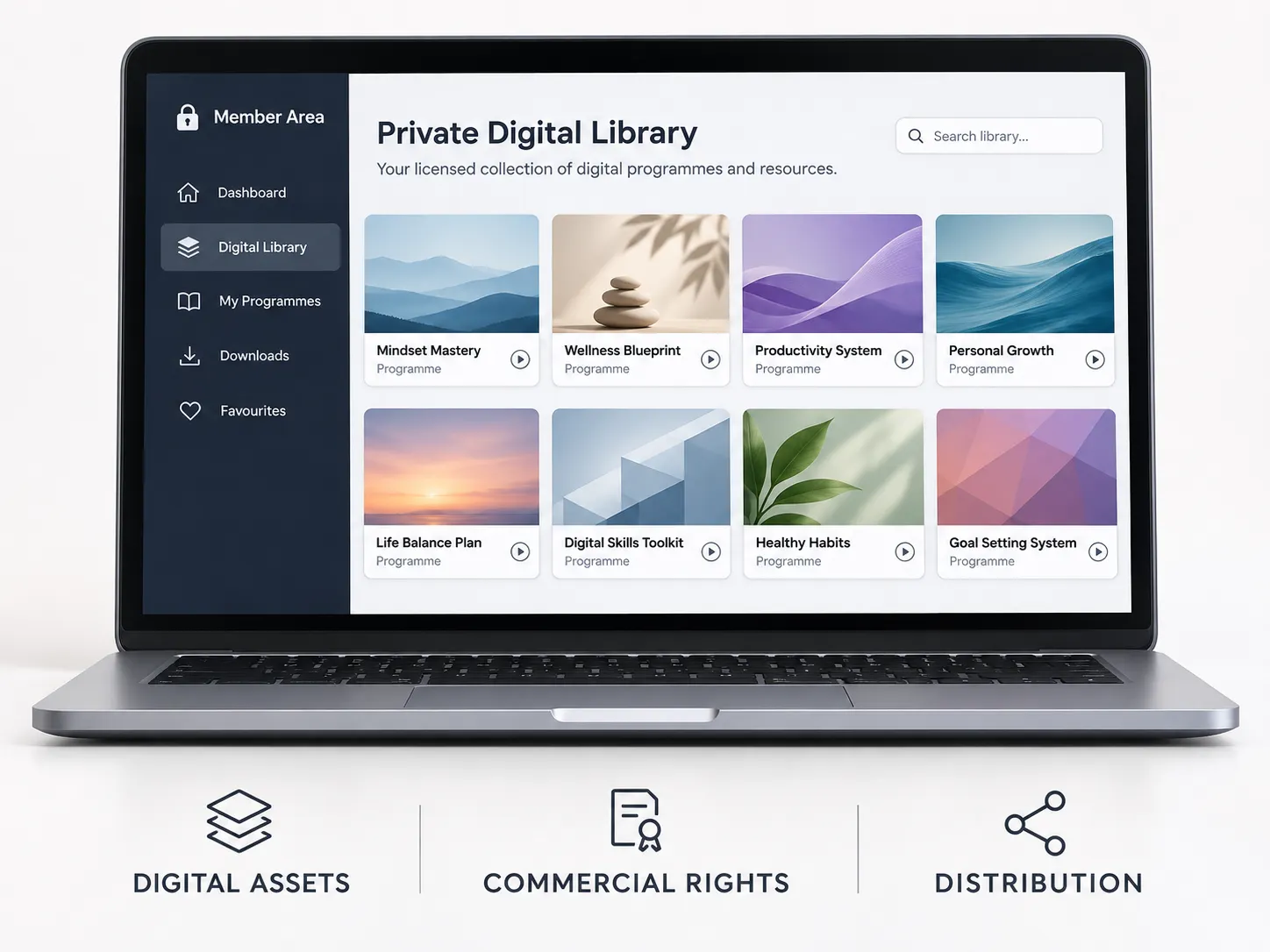
Instead of creating every digital product yourself from scratch, it is possible to build around professionally produced digital products that already exist... and obtain defined commercial rights to market and distribute them.
That distinction matters.
You’re not simply buying another course for yourself to watch.
The digital product becomes something you can potentially build a commercial publishing business around, subject to the rights granted by the licence.
So the starting question changes.
Instead of:
“What product do I need to create?”
You can begin asking:
“What useful digital asset can I take to the right audience?”
BUT LICENSING DOESN’T BUILD THE BUSINESS FOR YOU
This part is important.
Removing the need to create every product yourself does not remove the need to build a real business around it.
You still need to understand:
Who the product is for
Why that audience should care
How to position it
How to generate traffic
How to capture leads
How to convert customers
How to improve what isn’t working
The licence doesn’t magically create customers.
And the fact that a product already exists doesn’t guarantee that people will buy it.
You still have to connect the right product with the right audience and build the marketing and distribution around it.
SO WHAT ACTUALLY CHANGES?
The biggest difference is where you begin.
With many online-business models, one of the first problems is:
“What am I going to sell?”
With licensed digital products, part of that initial product-development burden can already have been handled.
That means more of your attention can go towards:
Positioning.
Marketing.
Traffic.
Lead generation.
Sales.
Distribution.
And gradually building a system around the assets you have access to.
WHICH ROUTE SOUNDS MORE LIKE YOU?
You might read all of this and still prefer dropshipping.
That’s completely fine.
You came to Product-to-Profit to learn about ecommerce, and we’ll continue helping you do exactly that.
But perhaps you’re thinking:
“I like the idea of building an online business... but I’m more interested in marketing and selling digital products than sourcing and fulfilling physical ones.”
If so, this is probably a route worth understanding properly before you make your decision.
YOU DON’T NEED TO DECIDE ANYTHING TODAY
For now, I simply wanted to show you that the option exists.
Over the next few days, I’ll explain a little more about how this type of business works...
why licensing caught my attention...
what still needs to be built around the products...
and how someone can progressively build a portfolio of digital assets rather than relying on one physical product.
Then you can decide for yourself whether it fits the kind of online business you actually want to build.
Keep an eye on your inbox. I’ll show you the next part there.
Ben

Stratstone Publishing Ltd.